

How To Never Hire Wrong Again (5-Step System)
The character-based interview process that predicts success better than any resume.

👋 Hey, Kyle here! Welcome to The Influential Project Manager, a weekly newsletter covering the essentials of successful project leadership.
Today’s Overview:
85% of hiring failures stem from character issues, not skill gaps. Yet most construction companies still hire based on resumes and hope for the best.
Character only reveals itself under pressure, which means traditional interviews miss the most critical success factors entirely
This proven system reveals true character before day one, helping you build teams where top talent chooses to stay and grow.
🏗️ Today’s newsletter is presented by PLOT!
Stop Losing 8+ Hours Every Week to Spreadsheet Hell.
Another procurement disaster because someone forgot to update “the master spreadsheet.” Another project delay because your team is working off three different versions.
Sound familiar? Spreadsheets weren’t built for procurement.
PLOT gives you the familiar spreadsheet feel... but with automation that actually works. Build your procurement log once. PLOT keeps everything updated automatically.
The result? 8 hours back in your week. Zero version confusion. Procurement that runs like clockwork. Because procurement is too critical to gamble on someone’s Excel tab.
Try PLOT today and make spreadsheets suck a little less.
📋 How To Never Hire Wrong Again (5-Step System)
Filed under: Leadership & Managing People

Let me tell you about two project managers I’ve worked with.
Manager A had fifteen years of healthcare construction experience. Stellar references. Could discuss MEP coordination and infection control protocols like a seasoned pro. In interviews, he outlined detailed approaches to phased construction and spoke fluently about AHJ requirements.
Manager B had solid experience but wasn’t the most impressive on paper. What stood out was how he talked about developing his team, handling conflicts, and learning from failures. He asked thoughtful questions about our company culture and team dynamics.
Guess which one I hired three years ago?
I went with Manager A. The resume looked perfect. The technical knowledge was undeniable.
Six months later, he was gone.
Not because he couldn’t manage projects. Because he couldn’t manage people. Team members started requesting transfers. Client relationships soured. What looked like technical mastery on paper crumbled under the pressure of real leadership.
I calculated the total costs of my decision and it blew my mind. $127,000 in direct replacement expenses, plus immeasurable damage to team morale and client trust.
Damn.
That failure taught me something Navy SEALs and Special Operations Forces have known for decades: you can’t see talent on a resume.
You Can Train Skills But You Can’t Train Character
85% of hiring failures stem from character issues, not skill gaps. Yet most construction companies still hire based on resumes and hope for the best.
The industry obsesses over finding “skilled workers” when what we actually need is people with the character to become skilled workers and stay long enough for us to develop them.
The companies winning the talent war understand a fundamental truth: character is capacity.
Someone with high drive, adaptability, and integrity will master new skills quickly. Someone without these traits will struggle regardless of their experience level.
You can train skill, but you can’t train character.
If you only change one thing about your talent hiring process, it should be hiring for character and training for skill.
The 9 Character Traits That Predict Success
Based on extensive Special Operations research, these nine traits consistently predict long-term performance across industries:
Drive—The need for achievement with a growth mindset
Resiliency—The ability to persevere through challenges and bounce back from setbacks
Adaptability—The ability to adjust behavior according to changing situations
Humility—Self-confidence paired with understanding that you don’t know everything
Integrity—Adherence to what is legal AND what is right
Effective Intelligence—The ability to solve practical problems when a “book solution” isn’t available
Team-ability—The ability to function within a team, placing organizational needs above personal ones
Curiosity—The desire to discover new information and improve processes
Emotional Strength—Positive attitude, high empathy, and emotional control under stress
You’re not seeking perfection in all nine areas. You’re identifying someone’s strongest character traits and assessing whether they align with your specific role requirements.
The question becomes: how do you systematically assess these traits in an interview process?
The 5-Layer Interview System That Reveals Character
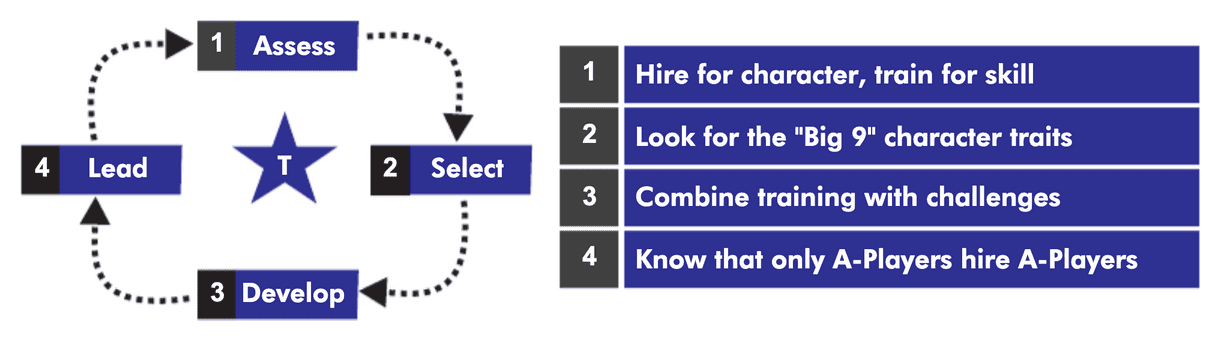
Traditional interviews fail because they rely too heavily on what candidates say rather than what they actually do. This system moves beyond surface-level questioning to reveal character through multiple assessment methods.
Think of it like Special Operations assessment—each layer builds upon the previous one, creating increasing pressure while gathering different types of intelligence about who someone really is.
Layer 1: Foundation Screening
Purpose: Eliminate clearly unqualified candidates and establish minimum requirements
This isn’t about being impressive. It’s about being efficient. Before you invest serious time in assessment, you need to confirm basic qualifications and get initial character indicators.
The Process:
Start with resume review, but don’t just look for years of experience. Look for patterns that reveal character. How do they describe challenges and setbacks? Do they take credit for team successes or share it? Is there career progression showing growth and increasing responsibility?
During phone screening, use knockout questions for non-negotiable requirements, but also assess communication style and professionalism. Quality candidates ask thoughtful questions about your company culture and team dynamics.
Immediate Red Flags:
Blaming others for past failures without taking any responsibility
No questions about company culture, team dynamics, or growth opportunities
Inability to articulate what they’re seeking in their next role beyond money
This layer reveals basic professionalism, communication skills, and whether they’ve thought seriously about their career direction.
It also reliably eliminates obvious mismatches and people who aren’t serious about the opportunity.
Layer 2: Behavioral Interview Assessment
Purpose: Use past behavior to predict future performance through structured questioning
Here’s where most companies stop—and where most hiring mistakes happen. Behavioral interviews are powerful, but only if you know what you’re looking for and how to dig deeper than surface responses.
The Framework:
Focus on scenarios that reveal character under pressure.
Use the STAR method (Situation, Task, Action, Result) but dig deeper into the “why” behind their actions. The goal isn’t just to understand what they did, but how they think and what drives their decisions.
Drive & Achievement Questions:
“Tell me about a time you set an ambitious goal. How did you achieve it?”
“Describe a project where you went above and beyond requirements”
“When have you been most proud of your professional growth?”
Resiliency & Problem-Solving Questions:
“Describe a time when everything went wrong on a project. How did you handle it?”
“Tell me about a failure that taught you something important”
“When have you had to persist through a difficult situation?”
Team-ability & Leadership Questions:
“Describe a time when you had to work with someone difficult”
“Tell me about when you helped a team member succeed”
“When have you had to give someone tough feedback?”
Important Follow-up Probes:
“What was going through your mind when that happened?”
“How did you decide on that approach?”
“What would you do differently knowing what you know now?”
These questions reveal the candidate’s thought process and behaviors. The answer itself is important, but equally important is how the candidate reaches the answer.
How genuine are they in their response? How do they approach the problem? What is their decision-making process? In the solution, do they involve other people or do it all themselves?
This layer reveals their decision-making process, how they handle adversity, and whether they learn from experience.
Behavioral patterns are strong predictors, but be aware that people can rehearse responses or embellish stories.
Layer 3: Scenario-Based Challenges
Purpose: Observe how candidates think through real problems they’ll face in the role
This is where the assessment gets real. Scenario-based questions reveal real-time problem-solving because candidates can’t rehearse responses to your specific situations. You’re not looking for perfect answers—you’re observing their thought process.
Sample Scenarios:
For Project Managers: “You’re three weeks into a hospital renovation when the client requests a significant scope change. Your subcontractor says it will delay completion by two weeks and cost $15,000 extra. The client insists the original deadline stands. Walk me through your approach.”
For Superintendents: “It’s Tuesday morning and your concrete pour is scheduled for Thursday. The weather forecast shows potential rain. Your concrete sub is pushing to proceed, saying they can tent if needed. Your project manager is concerned about quality. What’s your decision process?”
For Estimators: “You have 30 minutes to identify potential cost overruns in this project spec. The owner is waiting for your call, and your competitor submitted their bid this morning.”
What to Observe:
How do they gather information before deciding?
Do they consider all stakeholders affected?
What’s their risk assessment process?
How do they balance competing priorities?
Do they think about long-term consequences?
For scenario-based questions, remember to replicate the job environment. The key is watching their thinking process unfold in real-time. Do they ask clarifying questions? Do they consider multiple perspectives? How do they weigh risks and benefits?
This layer reveals real-time problem-solving ability, stakeholder awareness, and decision-making under uncertainty. These are the authentic thinking patterns that are hard to fake.
Layer 4: Pressure Testing
Purpose: Reveal character under stress, as stress reveals truth
This is the layer most companies skip—and it’s often the most revealing. Construction is inherently stressful. Deadlines slip. Clients change their minds. Weather doesn’t cooperate. You need people who can think clearly and maintain their character when pressure builds.
Character is revealed at one’s limits. Under pressure, at one’s mental and physical limits, hard skills rapidly degrade. What remains is character.
Methods for Creating Pressure:
Time Pressure: Limited time to respond (construction decisions are often time-sensitive)
Uncertainty: Present scenarios where information is incomplete
Multiple Stakeholder Conflicts: Competing interests that mirror real job conditions
Technical + People Challenges: Combine technical problems with interpersonal complications
Sample Pressure Test:
“I’m giving you 10 minutes to walk me through your approach. You’re managing a renovation in an occupied hospital. This morning, you discover electrical work from last week doesn’t meet code—the inspector is rejecting it. The hospital has a critical patient care event in that space tomorrow. Your electrician claims the inspector is being unreasonable. The client is threatening legal action if the event can’t proceed. Your company’s reputation is on the line. Go.”
Character Reveals Under Pressure:
Do they stay calm or become flustered?
Do they ask clarifying questions or make assumptions?
How do they prioritize competing demands?
Do they take responsibility or look for blame?
Can they think clearly when stakes are high?
This layer reveals how they handle stress, their ability to prioritize under pressure, and whether they maintain composure when everything is on the line.
Pressure strips away facades and reveals authentic character. This is where true colors show.
Layer 5: Cultural Fit & Values Alignment
Purpose: Determine if their values and work style align with your team culture
Technical skills and character traits matter, but if someone doesn’t fit your specific culture, they won’t thrive long-term. This layer is about ensuring alignment between who they are and how your organization operates.
Values-Based Questions:
“What does integrity mean to you in a work context?”
“Describe a time when you chose between what was easy and what was right”
“What type of work environment brings out your best?”
Cultural Scenarios: Present situations that test alignment with your specific company values. If safety is paramount in your culture, give them a scenario where safety conflicts with schedule pressure.
Team Integration Assessment: Have them spend informal time with potential team members—lunch or a job site visit for natural interaction. Sometimes the most revealing conversations happen when the formal interview is over.
Reference Deep-Dive:
Use references to validate observed character traits with specific behavioral examples. Don’t just ask “Was he a good employee?” Ask “Can you give me an example of how he handled conflict with a difficult client?”
This final layer reveals whether their natural work style and values align with your culture, and how they interact with your existing team.
The Decision Framework
Character Assessment Matrix
Rate each candidate on the nine character traits (1-5 scale):
5: Exceptional strength
4: Above average
3: Adequate
2: Below average
1: Significant concern
Minimum Standards:
No scores below 3 in Integrity, Team-ability, or Resiliency
At least three scores of 4 or higher
Overall average of 3.5 or higher
Role-Specific Weighting
Project Managers: Drive, Effective Intelligence, Adaptability
Superintendents: Team-ability, Emotional Strength, Resiliency
Project Engineers: Curiosity, Adaptability, Humility
Final Assessment Questions:
Will they thrive in our specific work environment?
Do their values align with how we operate?
Will existing team members want to work with them?
Can I see them growing with the company long-term?
Your 90-Day Implementation Roadmap
Month 1: Foundation Building
Define character profiles for your key roles
Develop role-specific scenarios and questions
Train your interview team on behavioral techniques
Create assessment scorecards and documentation templates
Month 2-3: Pilot Testing
Apply this system to your next 2-3 hires
Document learnings about each candidate
Refine questions based on response quality
Track early performance indicators
Month 4+: Full Implementation
Check in with new hires at 30, 60, and 90 days
Correlate performance with interview assessments
Adjust character criteria based on actual results
Share character expectations with existing team
Ongoing: Continuous Refinement
Use the nine traits in performance reviews
Make character development part of career advancement
Document which assessment layers prove most predictive
Build your reputation as a character-first employer
Key Takeaways
Remember these fundamental principles:
You can train skill, but you can’t train character. Focus your assessment on character traits that predict long-term success.
The most effective selection is based on mindset and character. Technical skills are easier to develop than fundamental character traits.
A-players hire A-players. Include your best people in the hiring process—they’ll recognize talent and won’t tolerate mediocrity.
Character is revealed at one’s limits. Pressure testing is critical. Create assessment situations that push candidates beyond their comfort zone.
Interview questions should be standardized and aligned to specific character attributes. Scenario-based and behavioral questions work best. To add pressure, give candidates challenges during the interview and push them outside of their comfort zone.
The Bottom Line
Your competition is still hiring based on resumes and hoping for the best.
You now have a systematic approach to identify character before you extend an offer.
The construction industry’s talent shortage isn’t about finding skilled workers. It’s about identifying people with the character to become skilled workers and stay long enough for you to develop them.
Every great building starts with a solid foundation. Every great team starts with strong character.
Start with your next hire. Use this system. Document the results.
Six months from now, you’ll wonder how you ever hired any other way.
Until next week,
Kyle Nitchen

Whenever you’re ready, here are 4 ways I can help you elevate:
Read my Book. No Bullsh*t Project: A Project Manager’s guide to successful project leadership.
Install ProjectOS. My complete operating system for project leaders and their teams. A done-for-you toolkit—templates, agendas, KPI’s, and workflows—to run complex projects like a pro. (Our most popular product).
Join Antifragile Project Management. Supercharge your project leadership. My flagship program combining training, tools, and community. Book a discovery call to learn more.
Promote Your Business. Get your brand in front of 8,100+ highly engaged construction leaders and decision-makers with a 51% open rate.
This system is fantastic!!! Thank you for outlining it so clearly. Curious how it may apply to lower-stakes roles, such as internships. I'm in the process of hiring a marketing intern for my company, and some of the resumes I've received have no direct experience in any of the areas I'll need help with. Since this is an internship, I don't want to immediately dismiss those folks because I think what's more important is being coachable/teachable (and a large part of my role as their manager is to ensure I'll teach the information they'll need).
What are your thoughts on screening intern resumes?